Property owners searching for a dependable pest control service in Isanti encounter unique challenges created by expansive acreage, nearby wetlands, and high seasonal temperature shifts. Effective remediation requires identifying the primary biological source inside wall voids, crawlspaces, or outbuildings rather than repeatedly spraying surface symptoms.

A professional pest control service in Isanti is a structural inspection and biosecurity treatment protocol that neutralizes nesting insect colonies, excludes rodents from building envelopes, and establishes exterior chemical barriers across Isanti County properties.
Every service reflects the same meticulous attention to detail, whether it's a single job or a larger pest control service project across Isanti.
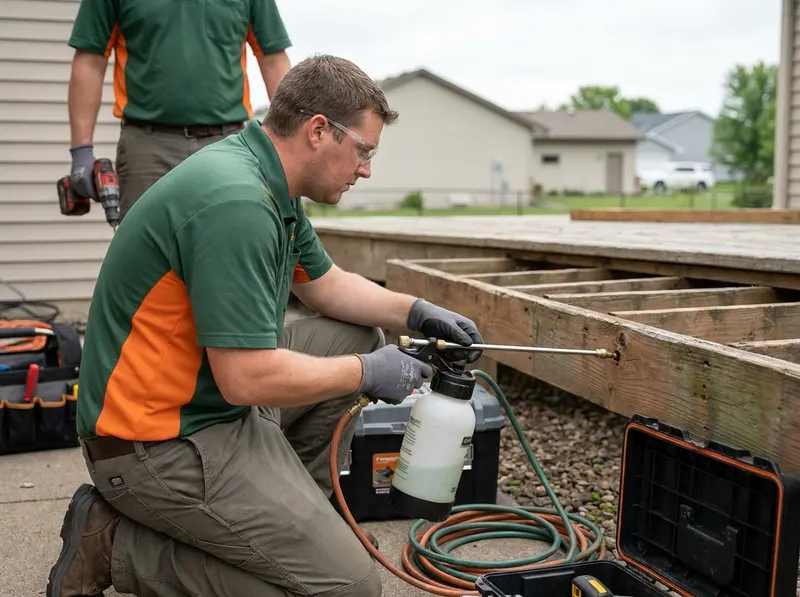
Sub-slab voids, wet wall framing, and foam-sheathed rim joists provide primary harborage for Camponotus species common across East Central Minnesota. Treatments utilize non-repellent liquid transfer chemistry and targeted void injections that foraging workers carry back to eliminate the parent queen. Every assessment inspects moisture damaged wood, roofline transitions, and tree canopy contact zones to sever active satellite nesting routes.
Get a quote →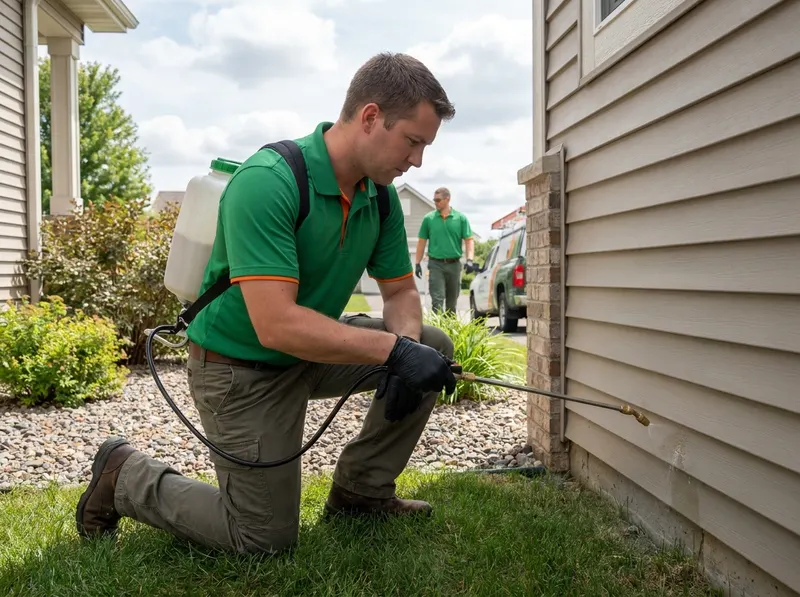
Liquid barrier defense creates an unbroken envelope of micro-encapsulated insecticide applied 3 feet upward onto the exterior foundation wall and 5 feet outward onto soil or gravel margins. This zone intercepts spiders, centipedes, and clover mites before they discover structural weep holes or sill plate cracks. Formulations bond securely to poured concrete, split-face block, and brick without damaging architectural finishes.
Get a quote →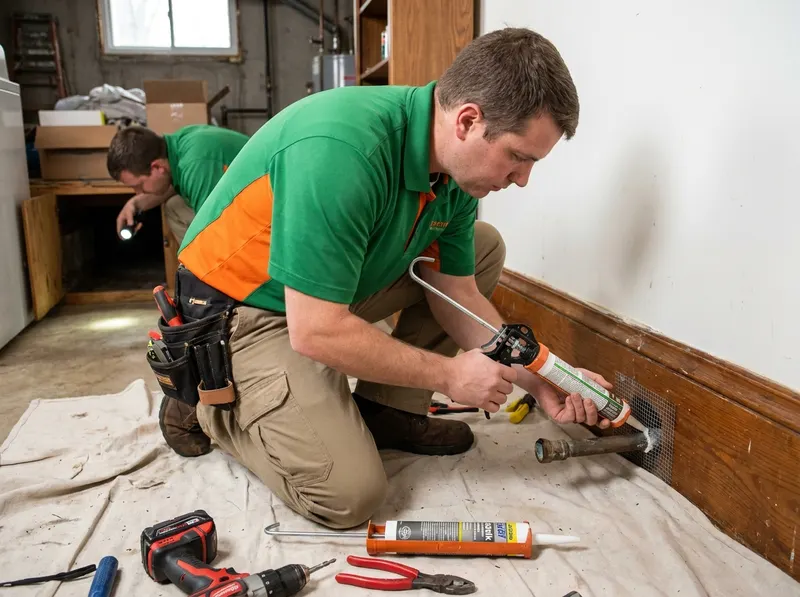
Field mice and voles gain entry through utility penetrations, garage door weatherstripping gaps, and uncapped foundation vents across rural-suburban acreage parcels. Mechanical exclusion installs 0.25-inch galvanized steel mesh, copper mesh packing, and metal escutcheon plates around pipe entries to eliminate pathways. Interior treatment combines locked mechanical snap stations and targeted monitoring traps placed in attics, drop ceilings, and unfinished mechanical rooms.
Get a quote →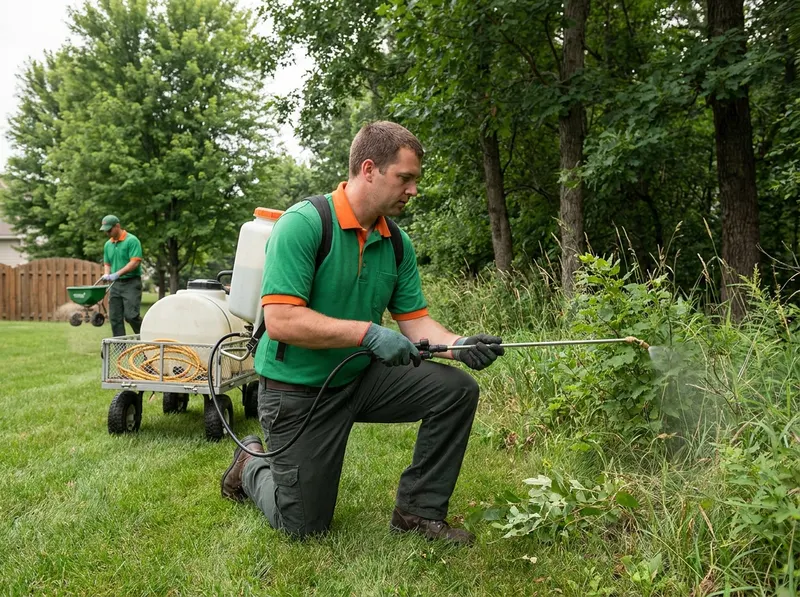
Properties adjoining overgrown grasses, timber stands, and marshy acreage face acute blacklegged and American dog tick burdens from May through October. High-pressure hydraulic sprayers deliver low-drift residual acaricides along transition ecotones, brush lines, and structural perimeters. This breaks the tick lifecycle in intermediate rodent harborage zones while avoiding designated turfgrass play surfaces.
Get a quote →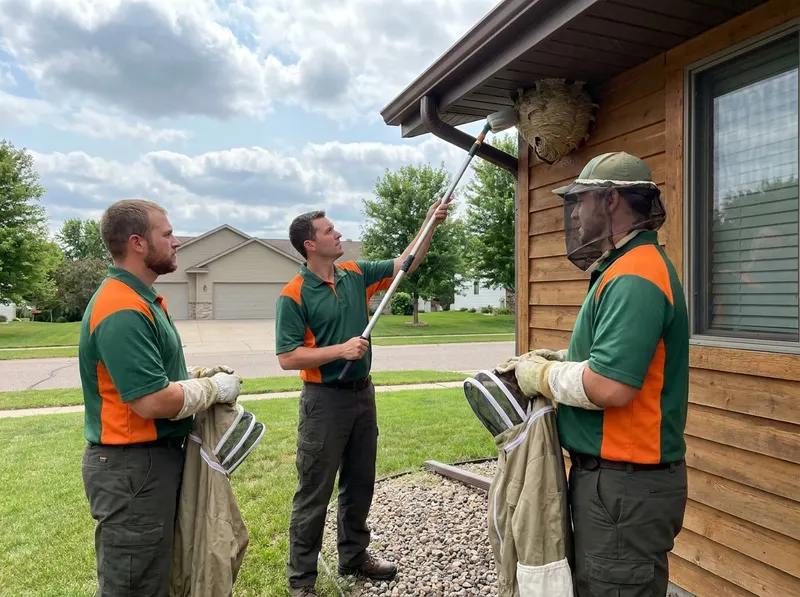
Aerial bald-faced hornet nests, yellow jacket ground cavities, and paper wasp eave clusters present immediate sting hazards near entryways, soffits, and outbuilding framing. Direct pressurized aerosol injection neutralizes nest defensive responses instantly, followed by complete physical detachment of the nest structure. Residual insecticidal dust is injected into attic overhang voids and facia joints to prevent re-establishment by secondary queens.
Get a quote →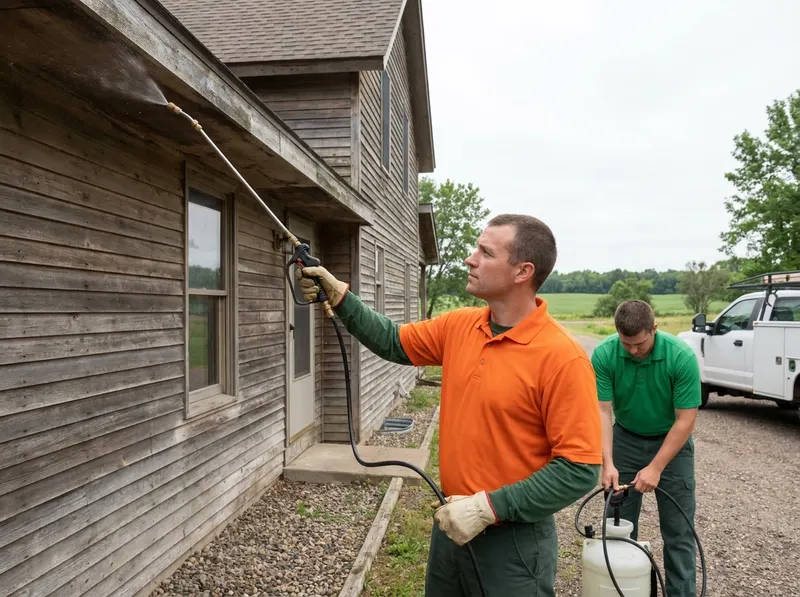
Late summer and early autumn cooling prompts mass aggregations of boxelder bugs and multicolored Asian lady beetles on sunny south- and west-facing exterior siding. High-volume wettable powder applications treat roof peaks, window casings, soffit vents, and vinyl seams to prevent interior overwintering. Stopping aggregations on the building exterior eliminates spring emergence inside finished living quarters.
Get a quote →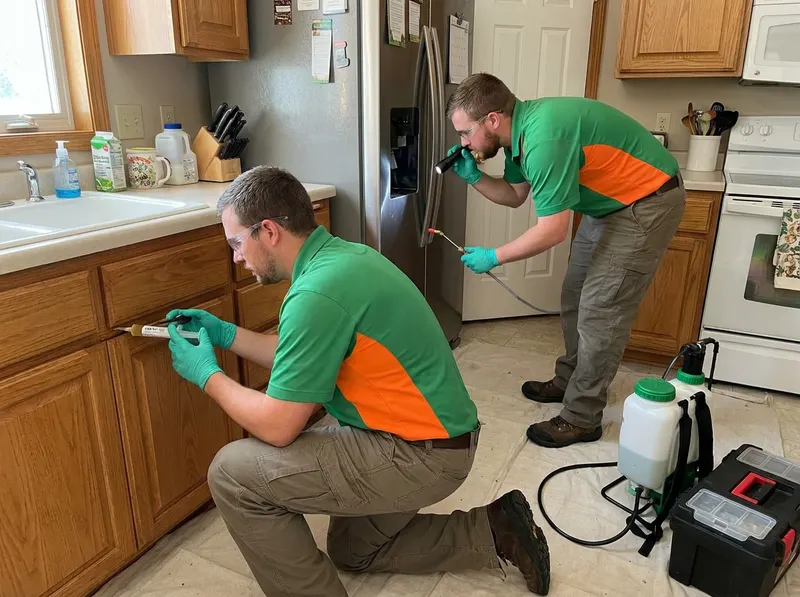
German and American cockroach infestations inside kitchens, floor drains, and equipment utility enclosures demand decisive eradication protocols. Technicians deploy targeted insect growth regulators (IGRs), low-odor non-repellent bait matrices, and localized crack-and-crevice treatments inside cabinet framing. Follow-up adhesive monitoring stations track reproductive population crashes to confirm complete population elimination.
Get a quote →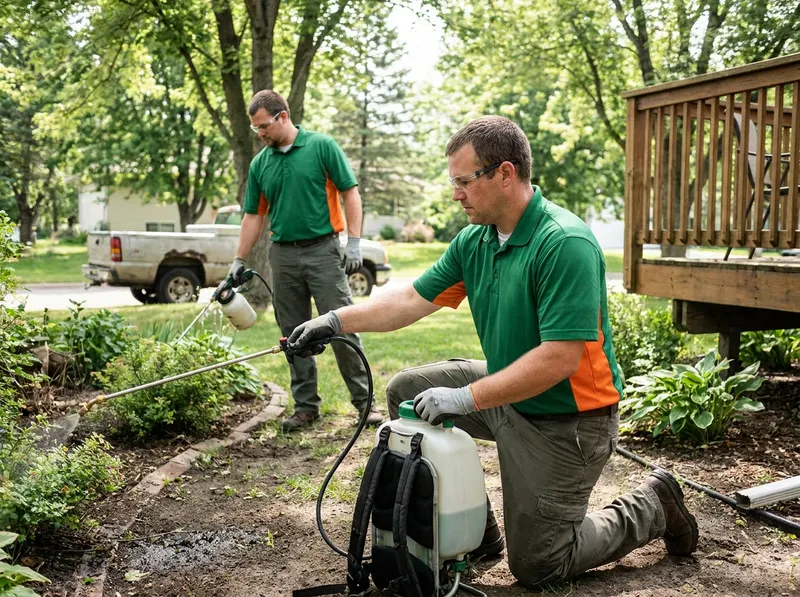
Heavy tree canopies and seasonal standing water create intense localized mosquito breeding near outbuildings, decks, and low-lying perimeter grounds. Ultra-low-volume (ULV) cold fogging targets the underside of dense foliage, shade trees, and brush piles where adult mosquitoes rest during daylight hours. In standing non-fish waters, biological larvicide dunks containing Bacillus thuringiensis israelensis prevent pupation without harming beneficial organisms.
Get a quote →You get a firm, itemized quote for your pest control service before any work begins, no surprises, no pressure.
Careful prep, tidy work, and a full cleanup when we are done. We treat your home and belongings like our own.
The same trusted, background-checked team from the first call to the final check.
Selecting appropriate intervention models depends directly on structural configuration and the targeted biological vector. If a residence exhibits isolated summer activity like nesting paper wasps under eaves or perimeter ant foraging, a targeted single-visit application resolves the active colony. If an acreage parcel features pole barns, spray-foam insulated rim joists, or chronic autumn field mice invasions, recurring seasonal protection or comprehensive mechanical exclusion is necessary.
Single treatments resolve acute surface populations, whereas recurring programs maintain protective chemical barriers through rain breakdown and seasonal pressure shifts. For properties bordering natural wetlands like Vannelli Brook or the Rum River corridor, broadcast pesticide sprays pose non-target drift risks; micro-encapsulated perimeter barriers and exterior tamper-resistant bait stations should be selected instead. Whole-structure heat remediation fits severe, confined internal infestations such as German cockroaches or bedbugs, whereas exterior liquid micro-sprays fit perimeter ant and spider suppression.
The fundamental operational trade-off centers on passive barrier maintenance versus active envelope sealing: perimeter sprays degrade over 60 to 90 days from UV radiation and precipitation, whereas physical exclusion requires upfront structural modifications but delivers permanent mechanical prevention.
Every project gets a firm, written price after a free on-site visit. Ranges below for orientation.
Tell us about your pest control service job and we'll send a clear, written quote, usually the same day. Or just call and talk to a real Isanti pro.
(218) 480-7907
Properties throughout Isanti County encounter severe seasonal pest vectors driven by the surrounding Rum River basin, sandy soil zones, and dense transition foliage near Vannelli Brook and Sanford Select Acres. Subdivisions such as Riverside Bluffs and Villages on the Rum regularly face spring carpenter ant pressures originating from aging timber stands, while newer acreage developments like Legacy Pines and Country Wood experience substantial autumn field mouse migrations when surrounding agricultural fields are harvested. Cold Minnesota winters drive pests inward against concrete foundation perimeters, demanding heavy-duty mechanical exclusion and chemical barriers engineered specifically for freeze-thaw soil conditions.
Free estimates for Isanti & the surrounding area.
 Trivano Pest Assistance